


A modern, internationally acclaimed entrepreneurial university at the heart of the region, GIFT University leads with the highest number of degree programs and robust linkages with globally recognised international universities. Through its Business Growth Window initiatives, GIFT connects academia with industry, creating a dynamic ecosystem where students, professionals, and entrepreneurs collaborate, innovate, and thrive, driving sustainable growth for youth, industry, and society at large.
We aim to deliver transformational education with an ethical and entrepreneurial mindset, fostering socio-economic development and creating a positive societal impact.
Hallmarks of GIFT University
At GIFT University, students transformation is built on three core pillars


GIFT University stands as Pakistan's emerging Entrepreneurial University, dedicated to shaping graduates who are theoretically strong, practically capable, and grounded in the highest ethical and moral values.
Hallmarks of GIFT University

By adopting innovative pedagogical practices and establishing support systems we are enhancing graduates' entrepreneurial mindset, analytical skills and facilitating them for successful career placements.
Inspired by the pioneering work of Prof. Saras D. Sarasvathy (USA), Prof. Heidi Neck (USA) and Prof. Henry Mintzberg (Canada), we place effectuation at the core of everything we do. Shaping policies and initiatives that strengthen entrepreneurship education, and aligned with GIFT University's vision of transformational education, this mindset is integrated across all our programs. It empowers individuals to build on their existing strengths, take purposeful action, and progress without relying on external support.

Paul M. Hammaker Professor in Business Administration
Darden School of Business
University of Virginia (USA)

John Cleghorn Professor of Management Studies
(Strategy & Organisation)
Canada

Jeffry A. Timmons Professor of Entrepreneurship Studies
Academic Director
Babson Academy (USA)
Shaping policies and initiatives that strengthen entrepreneurship education, and aligned with GIFT University's vision of transformational education, this mindset is integrated across all our programs. It empowers individuals to build on their existing strengths, take purposeful action, and progress without relying on external support and take purposeful action.
Hallmarks of GIFT University


The International Business Growth Window (IBGW), a collaborative platform between GIFT University and Gujranwala Business Alliance (GBA), is designed to unlock export-led growth for Gujranwala's SMEs and startups by bridging academia, industry, and governments.


GIFT University recently welcomed esteemed diplomats, fostering dialogue on academic collaboration, cultural exchange, and global partnerships. The visit highlighted the university's commitment to building bridges between nations and preparing students for a globally connected future.


Hallmarks of GIFT University
At GIFT University, we believe that empowering women is essential to building a progressive and inclusive society. Guided by our vision of transformational education and our core values of equality, respect, and innovation, we provide women with the knowledge, skills, and opportunities to lead with confidence.

Muhammad Anwar Dar, Founder & Chairman of GIFT University, has been honored with the Women Empowerment Award by Prime Minister Mian Shehbaz Sharif, recognizing GIFT's commitment to inclusivity.
Muhammad Anwar Dar, Founder & Chairman of GIFT University, has been honored with the Women Empowerment Award by Prime Minister Mian Shehbaz Sharif, recognizing GIFT's commitment to inclusivity. With 40% women in the workforce, 65% female students, and 65% female entrepreneurs, GIFT continues to lead in empowering women through education and career opportunities.
With initiatives like the GIFT Women Centre, Dedicated Girls' Block-IV, Girls-Only Degree Programs, Girls' Sports Ground, Fatima Jinnah Transport, Fatima Jinnah Professional Forum, and Mawaan Changian Development Centre - GIFT University ensures a safe and thriving environment.
Hallmarks of GIFT University
The Ethics & Corporate Social Responsibility (CSR) Program is a flagship initiative including Centre for Social Integration Program (SIP), Mawaan Changian Development Centre (MCD), Values & Ethics Committee (VEC) and Roshni Homes Trust (A Home for Orphans), designed to cultivate a culture of ethical awareness, civic responsibility, and sustainable practices among students, entrepreneurs, and the wider community.


The Ethics & Corporate Social Responsibility (CSR) Program is a flagship initiative including Centre for Social Integration Program (SIP), Mawaan Changian Development Centre (MCD), Values & Ethics Committee (VEC) and Roshni Homes Trust (A Home for Orphans), designed to cultivate a culture of ethical awareness, civic responsibility, and sustainable practices among students, entrepreneurs, and the wider community.
Hallmarks of GIFT University


Hallmarks of GIFT University

GIFT University is committed to provide international standard education, modern world facilities, internationally experienced faculty, and best infrastructure to ensure the quality of education for the youth and young professionals of this region.

Coventry, UK
Coventry University is a public research university in Coventry, England. The origins of Coventry University can be linked to the Coventry School of Design in 1843.

Sverdlovsk Oblast, Russia
Ural Federal University (UrFU) is one of the largest and leading higher educational institutions in Russia bringing together fundamental education and innovative approach towards the challenges of modern times.

Berlin, Germany
Technische Universität Berlin is a public research university located in Berlin, Germany and a member of TU9, an incorporated society of the largest and most notable German institutes of technology.

Wuhan, Hubei, China
Wuhan Textile University is a provincial public university in Wuhan, Hubei, China. It is affiliated with the Province of Hubei and funded by the Hubei Provincial People's Government.
Hallmarks of GIFT University

As a leading student of Accounting and Finance, I was honored to be selected for the Global UGRAD Cultural Exchange fellowship. The fully-funded scholarship by the Government of the United States allowed me to spend time in the country, learning more about my field of interest.

I have been selected for the prestigious UGRAD program, and the excellent guidance and support of my teachers, the innovative NGO, and the International Relations Department. They have inspired me and helped me at every step of my academic journey.

I am grateful to the university, the English department, and the International Relations department (IRD) for the education and guidance I have received, which have enabled me to build on my personal and professional development.

My heart for being an access ambassador for a non-fee Master Scholarship opportunity in the direction by supporting the Global UGRAD Program scholarship.
GIFT has established various specialized centers to achieve our vision and mission by providing ethical values, practical experiences, entrepreneurial mindset and promoting experiential learning.


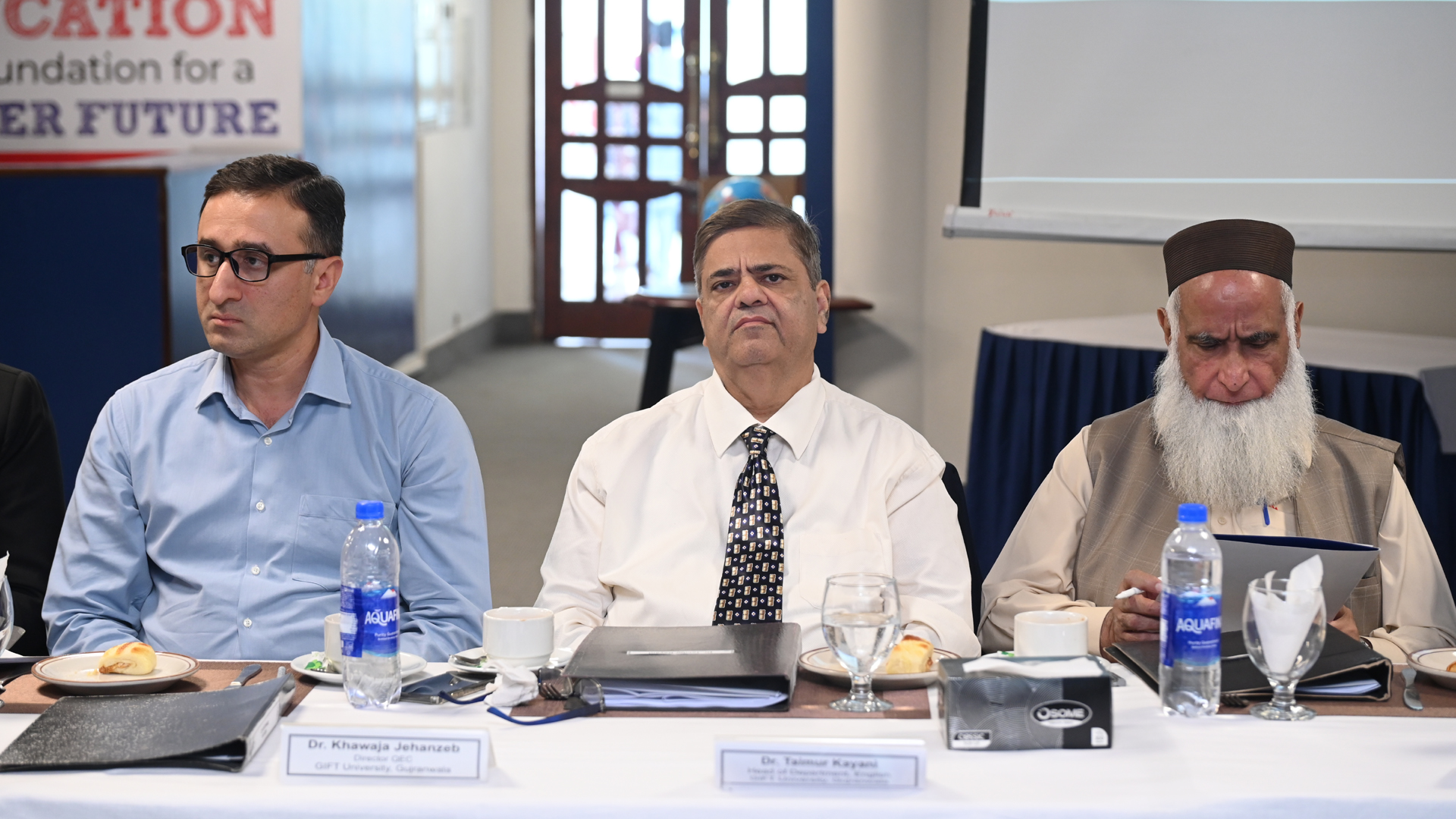
A meeting of the Board of Advanced Studies & Research (BASR) was held on Wednesday, May 06, 2026, at GIFT University, Gu...

The One-Day International Conference on “Islamic Political Thought and Modernity: Perspectives and Challenges (ICIPTM-...

GIFT University’s vision of “Education to Entrepreneurship” took another step forward as the Ambassador of Thailan...

Cohort II of our Junior Entrepreneurs Programme at GIFT University has been nothing short of inspiring. These young inno...
GIFT University's CSR initiatives demonstrate a strong commitment to community development and social responsibility. Through partnerships with Roshni Homes Trust and SM Foundation, GIFT supports vulnerable communities and works to create a positive, lasting impact on society.

Roshni Homes Trust provides residency, education, safety and a host of other services to orphan children without parental care in Pakistan.

The SM Educational Foundation provides financial assistance for not only primary and secondary studies but also for higher education.


